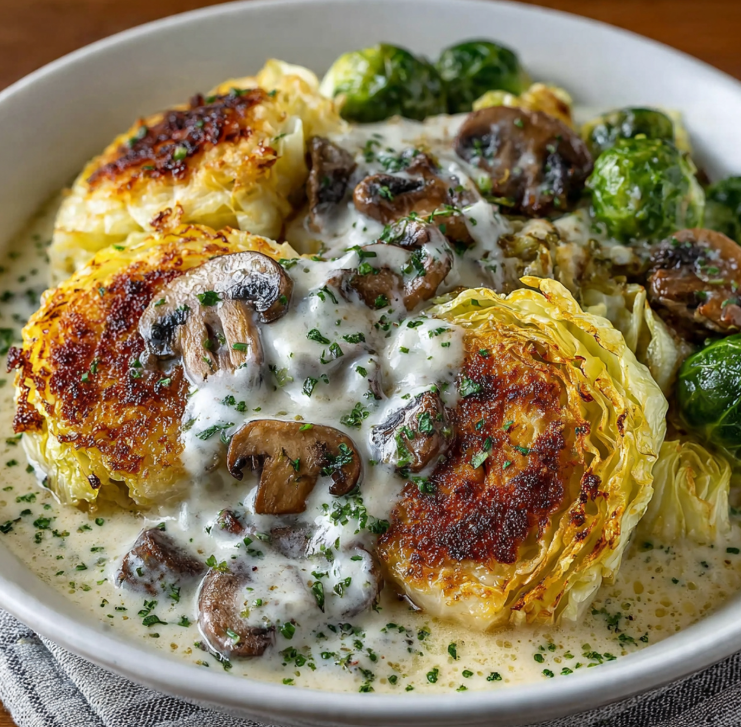
Oven Roasted Garlic Cabbage Steaks with Mushroom Salus: The Ultimate Healthy Side Dish

If you’ve been overlooking cabbage as a boring, boiled-afterthought vegetable, prepare for a revelation that will completely revolutionize your dinner routine. Oven Roasted Garlic Cabbage Steaks are about to become your new obsession—a dish that transforms this humble head of cruciferous goodness into caramelized, fork-tender “steaks” with crispy, charred edges and a melt-in-your-mouth center. When topped with a rich, umami-packed Mushroom Salus sauce, these cabbage steaks graduate from simple side dish to the star of your plate.
This recipe isn’t just another roasted vegetable trend. It’s a strategic combination of high-heat roasting that unlocks cabbage’s natural sweetness, paired with a luxurious mushroom sauce that adds layers of savory depth. The result? A healthy, low-carb, vegan-friendly dish that satisfies like a main course while delivering impressive nutritional benefits. Whether you’re meal prepping for the week, searching for impressive plant-based dinner ideas, or simply trying to eat more vegetables without sacrifice, these garlic cabbage steaks deliver restaurant-quality flavor with minimal effort.
Why Roasted Cabbage Steaks Deserve a Place in Your Weekly Rotation
The Science Behind the Transformation
Raw cabbage can be harsh, bitter, and difficult to digest. But subject it to the magic of high-heat roasting, and something remarkable happens. The natural sugars caramelize, creating golden-brown edges with a subtle sweetness. The tough cellulose breaks down, yielding a tender, almost buttery texture. And when you infuse it with garlic and olive oil, each layer becomes a flavor-soaked vehicle for deliciousness.
The “steak” concept isn’t just clever marketing—cutting cabbage into thick, cross-section slices creates sturdy planks that hold their shape during roasting, developing a satisfying, meaty texture that even devoted carnivores crave. This preparation method maximizes the surface area exposed to direct heat, ensuring maximum crispy edge potential while maintaining a succulent interior.
Nutritional Powerhouse in Every Bite
Cabbage is one of the most underrated superfoods. One serving of these roasted cabbage steaks provides:
- 85% of your daily Vitamin C for immune support
- Rich in Vitamin K for bone health and blood clotting
- High in fiber (4g per serving) for digestive health and satiety
- Glucosinolates—compounds shown to have cancer-preventive properties
- Only 60 calories per steak, making it ideal for weight management
When paired with the Mushroom Salus sauce, you add:
- B vitamins for energy metabolism
- Selenium and copper for antioxidant protection
- Beta-glucans for immune system support
- Additional protein and fiber for a complete nutritional profile
Ingredients for Oven Roasted Garlic Cabbage Steaks with Mushroom Salus
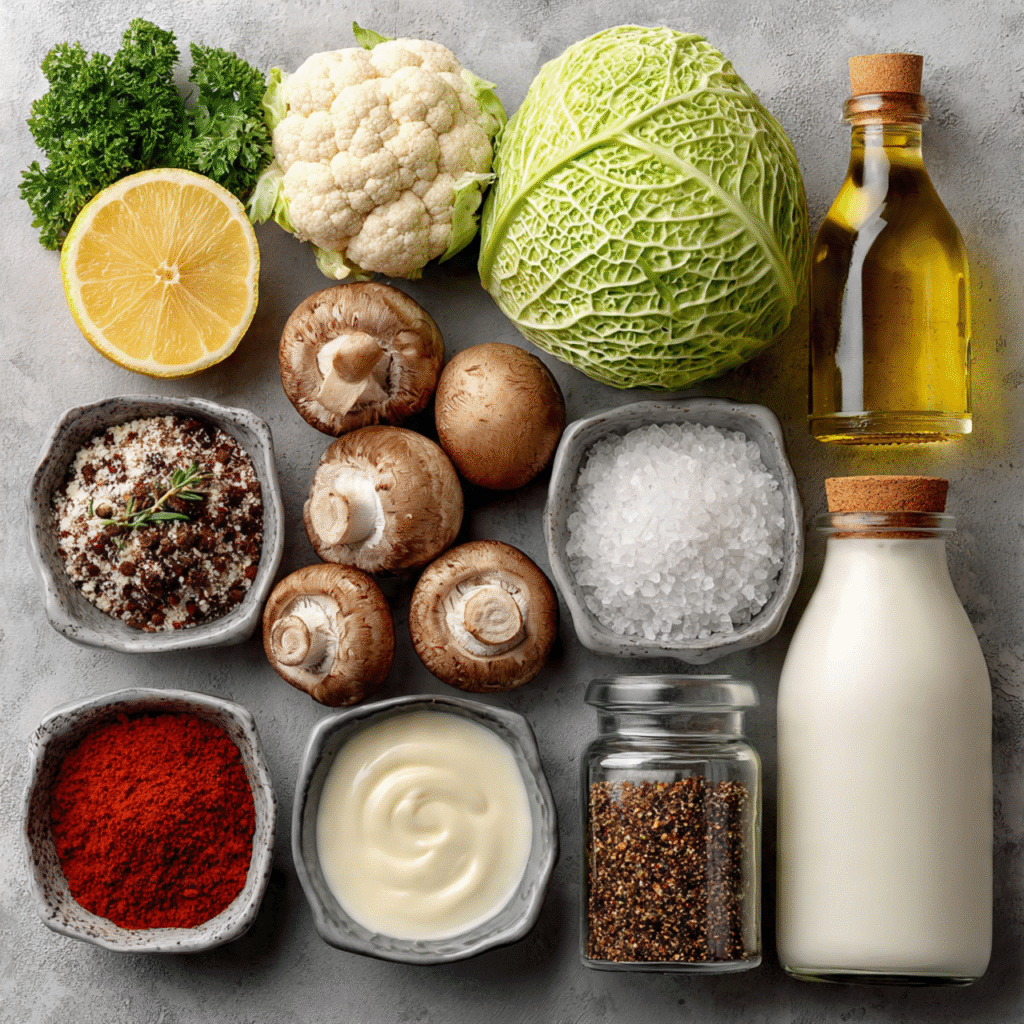
For the Cabbage Steaks:
- 1 large head green cabbage (2-2.5 lbs), outer leaves removed
- ¼ cup extra virgin olive oil
- 6 cloves garlic, minced
- 1 teaspoon smoked paprika
- 1 teaspoon dried thyme
- ½ teaspoon red pepper flakes (optional)
- 1 teaspoon sea salt
- ½ teaspoon black pepper
- 2 tablespoons fresh lemon juice
- 2 tablespoons fresh parsley, chopped (for garnish)
For the Mushroom Salus Sauce:
- 12 oz mixed mushrooms (cremini, shiitake, oyster), sliced
- 2 tablespoons olive oil or vegan butter
- 4 cloves garlic, minced
- 1 shallot, finely diced
- ½ cup vegetable broth
- ¼ cup dry white wine (or additional broth)
- 2 tablespoons tamari or soy sauce
- 1 tablespoon nutritional yeast (for umami depth)
- 1 teaspoon fresh thyme leaves
- ½ teaspoon smoked paprika
- ¼ cup full-fat coconut milk (or heavy cream)
- 1 tablespoon cornstarch mixed with 2 tablespoons water
- Salt and pepper to taste
- Optional: 1 tablespoon fresh sage, chopped
Step-by-Step Instructions: From Head to Plate
Stage 1: Preparing Perfect Cabbage Steaks
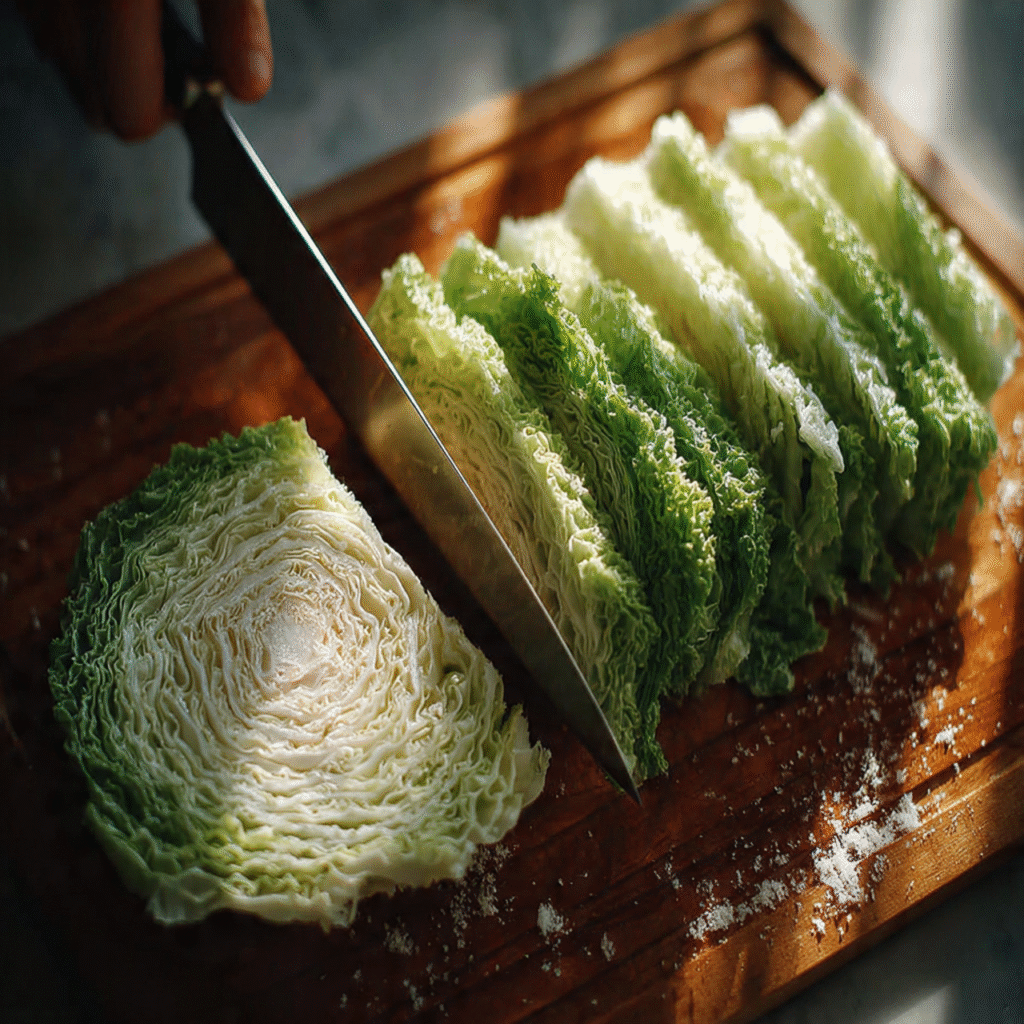
Step 1: Select and Prep Your Cabbage
Choose a firm, heavy head of green cabbage with tight, crisp leaves. Remove any wilted outer leaves, but keep the core intact—this is what holds your “steaks” together during roasting. Do not remove the core; it’s essential for structural integrity.
Step 2: Master the Cutting Technique
Place cabbage stem-side down on a stable cutting board. Using a sharp chef’s knife, slice the cabbage vertically into 1½-inch thick steaks. You’ll get 4-6 steaks from a large head. The key is consistent thickness—too thin and they’ll fall apart; too thick and they won’t cook through evenly. Reserve any outer leaves that fall off for another use (they’re great in stir-fries).
Step 3: Create the Garlic Infusion
In a small bowl, whisk together olive oil, minced garlic, smoked paprika, thyme, red pepper flakes, salt, and pepper. Let this mixture sit for 5 minutes to allow the garlic to infuse the oil—this step maximizes flavor distribution.
Step 4: Strategic Oil Application
Place cabbage steaks on a parchment-lined baking sheet. Use a pastry brush to generously coat both sides with the garlic oil mixture, ensuring you work it into every layer. The cabbage should be glistening but not swimming in oil. Drizzle any remaining oil over the tops.
Step 5: The Roasting Transformation
Roast in a preheated 425°F oven for 25-30 minutes, flipping carefully halfway through. The high heat is non-negotiable—it’s what creates those coveted crispy, caramelized edges. You’ll know they’re done when the edges are deep golden-brown and the center is fork-tender. The kitchen should smell like roasted garlic and sweet, nutty cabbage.
Step 6: Finishing Touches
Remove from oven and immediately drizzle with fresh lemon juice. This bright acidity cuts through the richness and balances the caramelized flavors. Let rest for 3 minutes before plating—this allows the cabbage to reabsorb some of the pan juices.
Stage 2: Crafting the Mushroom Salus Sauce
While the cabbage roasts, prepare your sauce. “Salus” (Latin for health) reflects this sauce’s nourishing properties.
Step 1: Sauté Aromatics
Heat olive oil or vegan butter in a large skillet over medium-high heat. Add shallot and cook 2 minutes until translucent. Add garlic and cook 30 seconds until fragrant—don’t let it brown.
Step 2: Mushroom Magic
Add sliced mushrooms in a single layer. Resist the urge to stir for the first 3 minutes—this allows proper browning and develops deep umami flavor. Once they’ve released their liquid and started to caramelize, stir and cook another 5 minutes until golden.
Step 3: Deglaze and Build Layers
Pour in white wine (or broth) to deglaze, scraping up browned bits from the pan. Add vegetable broth, tamari, nutritional yeast, thyme, and paprika. Simmer 5 minutes until reduced by one-third.
Step 4: Create Creamy Consistency
Stir in coconut milk and the cornstarch slurry. Simmer 2-3 minutes until sauce thickens to a gravy-like consistency that coats the back of a spoon. Season with salt and pepper.
Step 5: Final Enrichment
Remove from heat and let stand 2 minutes. The sauce will continue to thicken slightly. Stir in fresh sage if using.
Stage 3: Plating and Serving
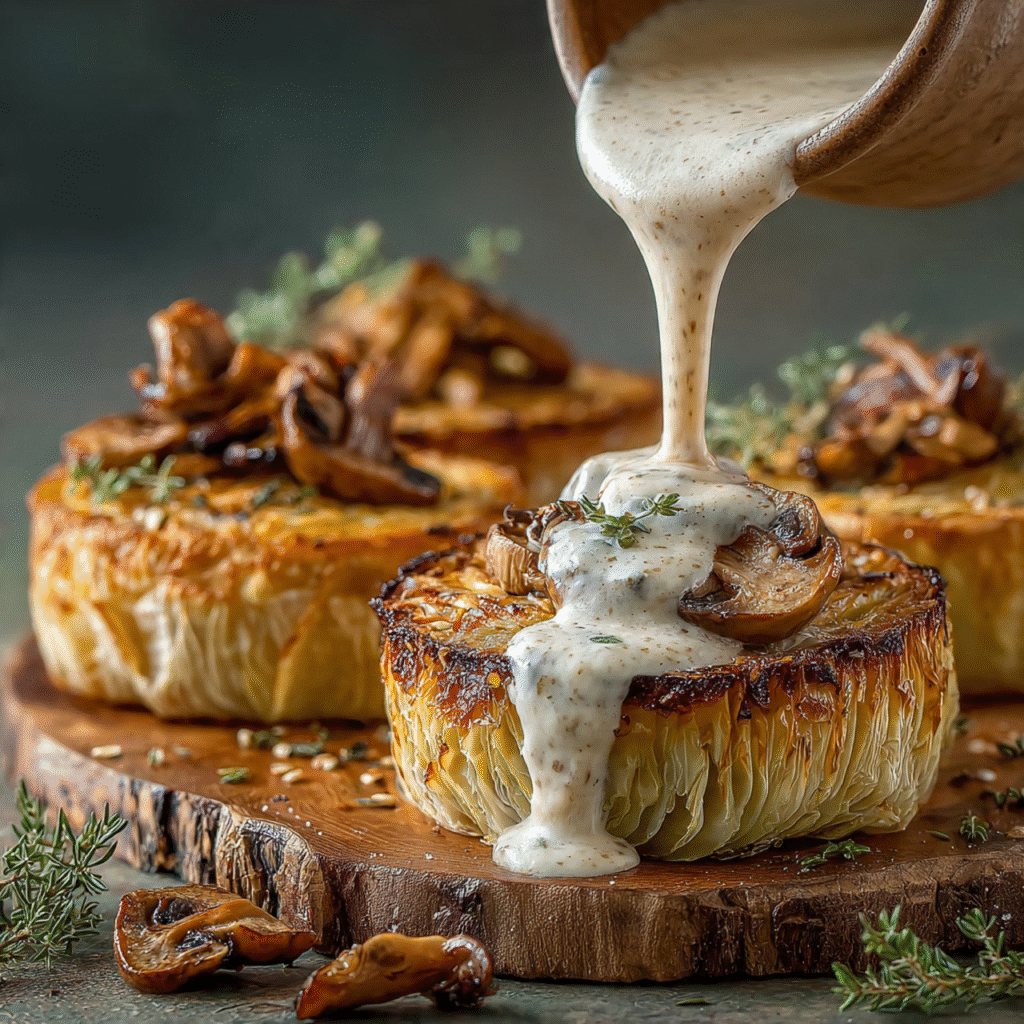
Place each cabbage steak on a warm plate. Spoon ¼ cup of mushroom salus sauce over the center, allowing it to cascade down the sides. Garnish with fresh parsley and a final drizzle of olive oil. Serve immediately while the cabbage is hot and the edges maintain their crispness.
Expert Tips for Cabbage Steak Perfection
Choosing the Right Cabbage: Green cabbage works best for steaks due to its dense structure. Savoy cabbage is too loose, while red cabbage can taste overly bitter when roasted. Look for heads weighing at least 2 pounds.
The Core Is Your Friend: Many recipes tell you to remove the core. Don’t. The core acts as a keel, holding the layers together. It becomes tender during roasting and is completely edible.
Avoiding the Sog Factor: Space steaks at least 2 inches apart on the baking sheet. Overcrowding traps steam and prevents browning. Use two sheets if necessary.
Flavor Infusion Hack: Use a fork to gently separate cabbage layers after brushing with oil. This allows the garlic mixture to penetrate deeper into the steak, flavoring every bite.
Mushroom Selection: For the salus sauce, use a mix of mushrooms. Cremini provide earthiness, shiitake add umami depth, and oyster mushrooms contribute delicate texture. Avoid white button mushrooms—they lack flavor complexity.
Make-Ahead Strategy: Roast cabbage steaks up to 4 hours ahead and reheat at 375°F for 8 minutes. The sauce can be made 2 days in advance and gently reheated. Assemble just before serving.
Delicious Variations to Customize Your Creation
Spicy Cajun Style: Add 1 teaspoon Cajun seasoning to the oil mixture. Top with a dollop of vegan remoulade instead of mushroom sauce.
Mediterranean Twist: Replace thyme with oregano and add sun-dried tomatoes to the mushroom sauce. Finish with kalamata olives and dairy-free feta.
Asian-Inspired: Use sesame oil instead of olive oil, add ginger to the cabbage coating, and create an Asian mushroom sauce with miso, rice vinegar, and scallions.
Cheesy Indulgence: Sprinkle each steak with 2 tablespoons of nutritional yeast before roasting for a cheesy, nutty crust. Top with cashew cream sauce instead of mushroom salus.
Herb Garden: Mix ¼ cup fresh herbs (rosemary, sage, parsley) into the garlic oil. The fresh herbs create a vibrant, aromatic crust.
Nutritional Information & Dietary Adaptations
Per Serving (1 cabbage steak + ¼ cup sauce):
- Calories: 185
- Protein: 6g
- Fat: 12g (healthy fats)
- Carbohydrates: 16g
- Fiber: 5g
- Net Carbs: 11g
- Vitamin C: 85% DV
- Vitamin K: 90% DV
Keto-Friendly: Reduce mushroom sauce to 2 tablespoons per serving to lower carbs to 8g net carbs total.
Whole30 Approved: Use ghee instead of oil, ensure your vegetable broth is compliant, and substitute coconut aminos for tamari.
Oil-Free: Roast cabbage on parchment without oil—it’s still delicious, though less crispy. Use vegetable broth to sauté mushrooms for the sauce.
Nut-Free: Already nut-free! Ensure your vegetable broth doesn’t contain hidden allergens.
Frequently Asked Questions
Q: Will the cabbage smell up my house?
A: Roasting cabbage creates a pleasant, sweet, nutty aroma—not the sulfuric smell of boiling. Your kitchen will smell like garlic and caramelized vegetables, which is delightful.
Q: Can I use purple cabbage instead?
A: You can, but green cabbage has a milder flavor that caramelizes better. Purple cabbage contains more anthocyanins that can taste bitter when roasted at high heat. If using purple, reduce oven temperature to 400°F and roast 5 minutes longer.
Q: My cabbage steaks fell apart. What went wrong?
A: Either the core wasn’t intact, or you sliced too thin. Aim for 1½-inch thickness minimum, and handle gently with a wide spatula when flipping.
Q: How do I store and reheat leftovers?
A: Store cabbage steaks and sauce separately in airtight containers for up to 4 days. Reheat cabbage in a 375°F oven for 8-10 minutes to restore crispiness. Microwave makes them soggy.
Q: Can I grill these instead of roasting?
A: Absolutely! Grill over medium-high heat for 6-8 minutes per side, brushing with the garlic oil mixture throughout. The char from grilling adds incredible smoky flavor.
Q: The mushroom sauce is too thin/thick. How do I fix it?
A: Too thin? Simmer longer or add more cornstarch slurry (1 teaspoon at a time). Too thick? Thin with vegetable broth 1 tablespoon at a time. The sauce should coat a spoon but still be pourable.
Q: Is this filling enough for a main course?
A: Yes! The fiber in cabbage and protein in mushroom sauce create satiety. For extra heartiness, serve over quinoa or with a side of roasted chickpeas.
Conclusion: Redefining Cabbage in Your Kitchen
Once you experience the transformation of simple cabbage into these elegant, flavor-packed steaks, you’ll never look at this cruciferous vegetable the same way again. This recipe proves that healthy eating doesn’t require expensive ingredients or complicated techniques—just respect for the ingredient and the right cooking method.
The Mushroom Salus sauce elevates the dish from simple to sublime, adding layers of umami richness that make each bite deeply satisfying. It’s a testament to how plant-based cooking can be both nourishing and indulgent, delivering the comfort-food satisfaction you crave while honoring your wellness goals.