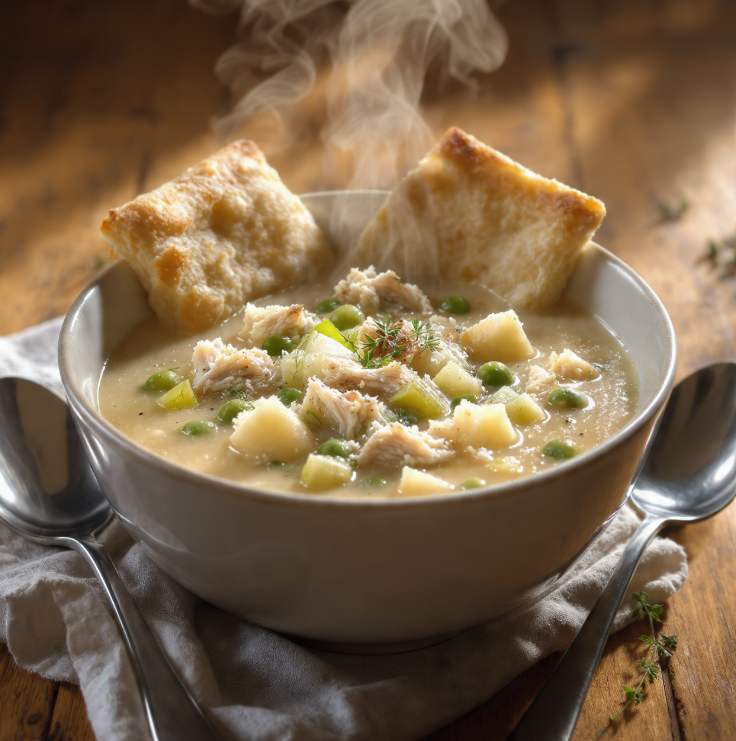
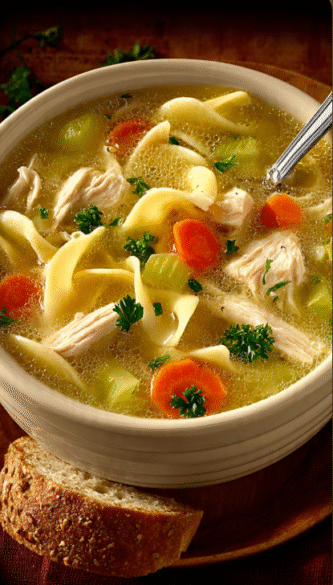
Homemade Chicken Noodle Soup: Complete Recipe and Cooking Guide

Homemade chicken noodle soup stands as one of the most universally beloved comfort foods—a dish that transcends generations, cultures, and occasions. This comprehensive guide teaches you how to create authentic, deeply satisfying chicken noodle soup from scratch that far surpasses any canned version. Whether you’re seeking a quick weeknight dinner, preparing nourishing meals for the week ahead, or looking to comfort someone with warm, homemade goodness, this detailed recipe delivers consistent, professional-quality results.
This complete guide walks you through ingredient selection, step-by-step preparation, professional cooking techniques, flavor-building strategies, and expert tips that transform simple components into something extraordinary. You’ll discover how to extract maximum flavor from chicken, build savory broths, achieve perfect noodle texture, and create variations matching your preferences. By following this guide, you’ll develop the skills and confidence to make chicken noodle soup that brings genuine comfort and satisfaction to every bowl.
Why Homemade Chicken Noodle Soup Deserves Your Attention
Chicken noodle soup’s universal appeal stems from multiple compelling reasons. First, it represents pure comfort—the warm broth, tender chicken, and soft noodles create an emotionally satisfying experience that soothes both body and spirit. Second, it’s remarkably versatile, adapting to different ingredients, preferences, and dietary requirements. Third, homemade versions dramatically exceed store-bought alternatives in flavor, nutrition, and quality.
The health benefits are substantial. Homemade chicken broth provides collagen and gelatin supporting joint health, bone health, and gut health. Chicken contributes complete protein with all essential amino acids. Vegetables add vitamins, minerals, and phytonutrients. The warm liquid aids digestion and supports hydration. Unlike commercial versions loaded with sodium and preservatives, homemade chicken noodle soup contains clean, whole ingredients you recognize and control.
Additionally, the kitchen aromatics filling your home while chicken noodle soup simmers creates an atmosphere of warmth and comfort. The cost is remarkably economical, using inexpensive ingredients to create abundant meals. Leftovers store beautifully and reheat perfectly, providing multiple meals from one batch. The satisfaction of creating something nourishing from scratch builds confidence and cooking skills.
Essential Ingredients and Their Roles
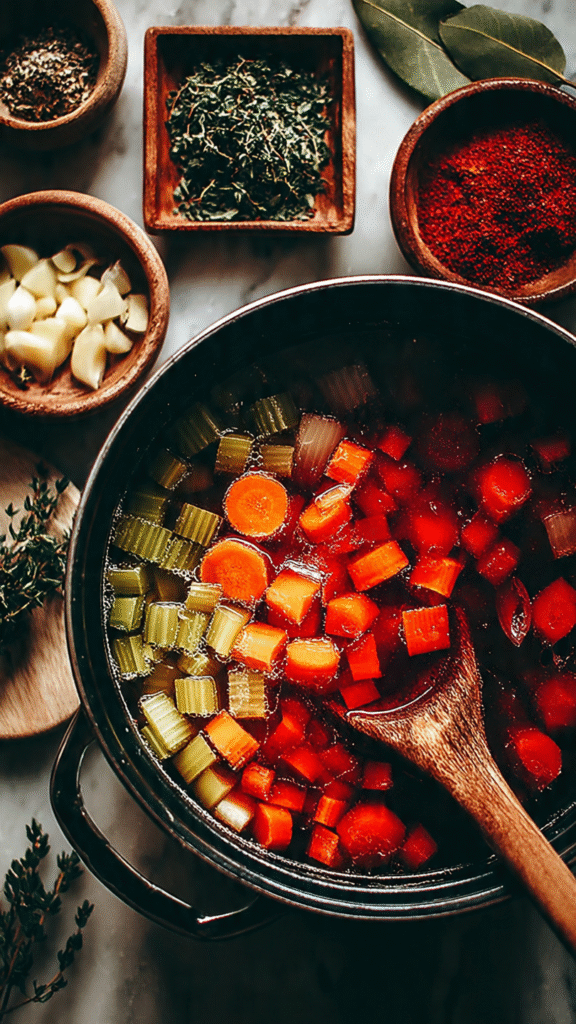
The Chicken Foundation: Use one whole chicken (3-4 pounds) or 2 pounds bone-in, skin-on chicken breasts and thighs. Whole chickens yield more flavor and create more gelatinous broth through extended simmering. The bones contribute collagen, creating a rich, luxurious mouthfeel. Skin adds fat soluble vitamins and flavor. Simmer the chicken for 45-60 minutes, then remove, cool, and shred the meat for later addition.
The Aromatic Vegetable Base: Two medium yellow onions, four large carrots, four celery stalks, and six cloves fresh garlic create the flavor foundation. These vegetables are sautéed before adding broth, developing natural sugars and building complex flavor layers through slow cooking. The result is a savory, aromatic base that defines excellent chicken noodle soup.
The Broth and Liquid: Eight cups of low-sodium chicken broth combined with the flavorful liquid from simmering chicken creates the soup’s foundation. Using low-sodium broth allows seasoning control, essential for achieving balanced flavor. The chicken-simmering liquid contributes collagen, minerals, and concentrated chicken flavor.
Noodles: Use egg noodles (traditional and most beloved), small pasta shells, or ditalini pasta. Cook noodles separately to just tender, approximately 6-7 minutes, slightly underdone to prevent mushiness during final simmering. Drain but don’t rinse—retained starch helps sauce adhere to noodles.
Seasonings and Finishing: Dried thyme, dried bay leaves, salt, pepper, and fresh parsley create aromatic depth. Optional additions include poultry seasoning, dried rosemary, or fresh dill for variation. Fresh lemon juice added at the end provides brightness and acidity that balances richness.
Complete Homemade Chicken Noodle Soup Recipe
Ingredients
Chicken and Broth Base:
- 1 whole chicken (3-4 lbs) or 2 lbs bone-in, skin-on chicken pieces
- 8 cups low-sodium chicken broth
- 2 bay leaves
- 1 teaspoon dried thyme
Aromatic Vegetables:
- 2 medium yellow onions, diced
- 4 large carrots, peeled and sliced into coins
- 4 celery stalks, diced
- 6 cloves fresh garlic, minced
Noodles and Finishing:
- 8 oz egg noodles
- ¼ cup fresh parsley, chopped
- 1-2 tablespoons fresh lemon juice
- 1 teaspoon kosher salt (adjust to taste)
- ½ teaspoon freshly ground black pepper
- ⅛ teaspoon cayenne pepper (optional)
Optional Flavor Additions:
- 1 teaspoon poultry seasoning
- ½ teaspoon dried rosemary
- 1 tablespoon fresh dill
- ½ teaspoon dried sage
Instructions
Phase 1: Preparing the Chicken Broth
- Simmer Chicken: Place whole chicken (or chicken pieces) in a large Dutch oven. Add eight cups low-sodium chicken broth, two bay leaves, and one teaspoon dried thyme. Bring to boil over medium-high heat (approximately 15-20 minutes).
- Reduce Heat: Once boiling, reduce heat to medium-low and maintain gentle simmer. Skim any foam or impurities rising to surface using a slotted spoon. This clarifies the broth and improves clarity.
- Simmer Chicken: Cook for 45-60 minutes until chicken is very tender and meat easily separates from bones. The broth will develop golden color from extended cooking.
- Remove Chicken: Carefully remove chicken using tongs or a slotted spoon. Transfer to a cutting board. Once cool enough to handle, shred meat, discarding bones, skin, and cartilage. Set aside shredded chicken.
- Strain Broth: Pour broth through a fine-mesh strainer into a clean pot, discarding solids. The resulting broth should be clear and golden-colored, indicating proper extraction.
Phase 2: Building Aromatic Foundation
- Heat Broth: Return strained broth to pot and heat to medium. Add diced onions and cook for three minutes until beginning to soften.
- Add More Vegetables: Add sliced carrots and diced celery. Cook for an additional four minutes, allowing vegetables to begin softening.
- Add Garlic: Add minced garlic and cook for one minute until fragrant. Be careful not to burn garlic, which creates bitterness.
Phase 3: Combining Components
- Cook Noodles: While vegetables are sautéing, bring a separate large pot of salted water to boil. Add egg noodles and cook according to package directions minus one minute (noodles should be tender but slightly firm). Drain in colander but don’t rinse.
- Bring Broth to Simmer: Increase heat under broth to medium-high and bring to gentle boil. Once boiling, reduce heat to medium-low, maintaining gentle simmer.
- Add Shredded Chicken: Return shredded chicken to the pot, stirring to distribute evenly.
- Add Cooked Noodles: Add drained noodles to the simmering broth. Stir gently to combine, ensuring noodles are submerged and distributed throughout.
Phase 4: Seasoning and Finishing
- Add Final Seasonings: Add one teaspoon kosher salt, ½ teaspoon black pepper, and optional ⅛ teaspoon cayenne pepper. Stir thoroughly to distribute seasonings.
- Adjust Flavor: Stir in one-two tablespoons fresh lemon juice, tasting as you go. The acidity should brighten the broth without making it taste sour.
- Taste and Adjust: Taste the soup carefully. Add additional salt and pepper as needed. Remember that broth already contains sodium—adjust conservatively.
- Add Fresh Herbs: Remove from heat. Stir in ¼ cup fresh chopped parsley. Fresh herbs should be added just before serving to preserve color and aromatic qualities.
- Serve Immediately: Ladle into warmed bowls and serve while hot, allowing steam to rise and aromatics to enhance the eating experience.
Cooking Time Summary:
- Simmering chicken: 45-60 minutes
- Sautéing aromatics: 7-8 minutes
- Cooking noodles: 6-7 minutes
- Final combining and seasoning: 3-5 minutes
- Total Active Cooking Time: 35-40 minutes
- Total Time (including simmering): 70-85 minutes
Professional Cooking Techniques for Excellence
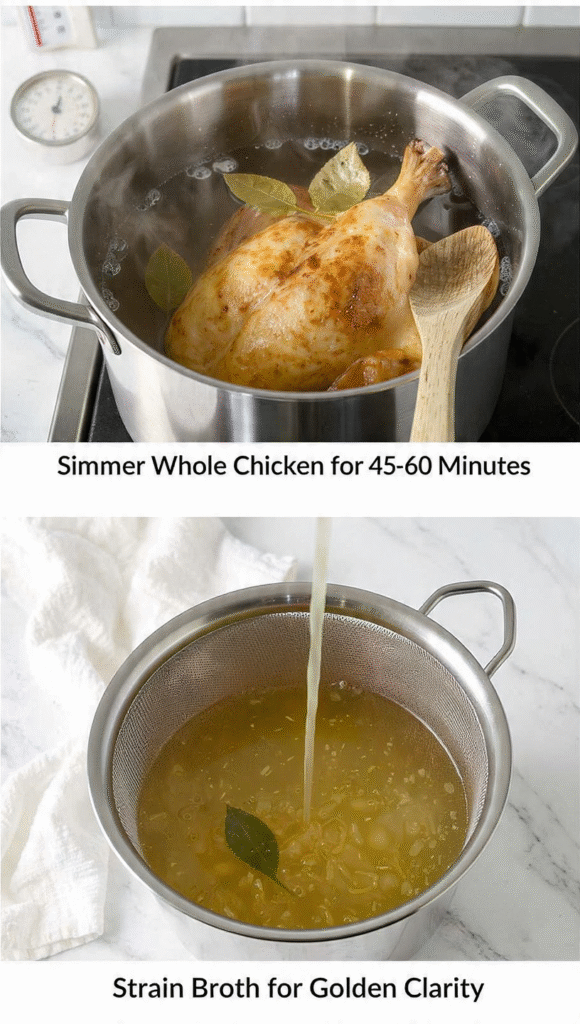
Extracting Maximum Chicken Flavor: The foundation of excellent homemade chicken noodle soup lies in proper chicken preparation. Using bone-in, skin-on chicken contributes collagen, gelatin, and fat-soluble vitamins that create luxurious mouthfeel and rich flavor. Simmer gently rather than boiling vigorously—gentle heat extracts maximum flavor without breaking down proteins excessively. The resulting broth should be golden-colored and smell deeply savory and inviting.
Building Aromatic Foundation Through Slow Cooking: Unlike dumping all ingredients simultaneously, this recipe builds flavor through layering. Chicken simmering creates the foundation. Slowly sautéing aromatics in the hot broth develops natural sugars through caramelization. Fresh garlic added last releases its aromatic compounds just before addition. This approach creates complexity impossible through simple ingredient mixing.
Achieving Perfect Noodle Texture: Cook noodles separately, slightly underdone (one minute less than package directions). This approach prevents mushiness when noodles continue cooking during final simmering. Drain but don’t rinse—retained starch helps sauce adhere to noodles, creating better texture and mouthfeel.
Brightening with Acidity: Fresh lemon juice added near the end provides brightness that balances richness. The acidity enhances perception of other flavors, making the soup taste more complex and refined. This professional technique elevates homemade soup to restaurant quality.
Creative Variations and Adaptations
Creamy Chicken Noodle Soup: Add ½ cup heavy cream or half-and-half near the end, heating through gently without boiling. Include one tablespoon fresh dill and reduce lemon juice to one tablespoon. This variation creates luxurious, restaurant-style soup.
Asian-Inspired Chicken Noodle Soup: Replace egg noodles with ramen noodles. Substitute thyme with two teaspoons fresh ginger and add two tablespoons soy sauce. Include fresh cilantro instead of parsley and serve with lime wedges. This variation transforms the soup with Asian flavors.
Garden Vegetable Chicken Noodle Soup: Add frozen peas (½ cup), corn kernels (½ cup), and diced zucchini (1 cup) in the final five minutes of simmering. This increases nutritional value and creates heartier soup.
Spicy Chicken Noodle Soup: Increase cayenne pepper to ¼ teaspoon and add ¼ teaspoon red pepper flakes. Include fresh jalapeño slices for heat. Serve with lime wedges and hot sauce for customizable spice level.
Rotisserie Chicken Quick Version: Use two cups shredded rotisserie chicken instead of simmering whole chicken. This reduces cooking time significantly while maintaining excellent flavor.
Serving Suggestions and Pairings
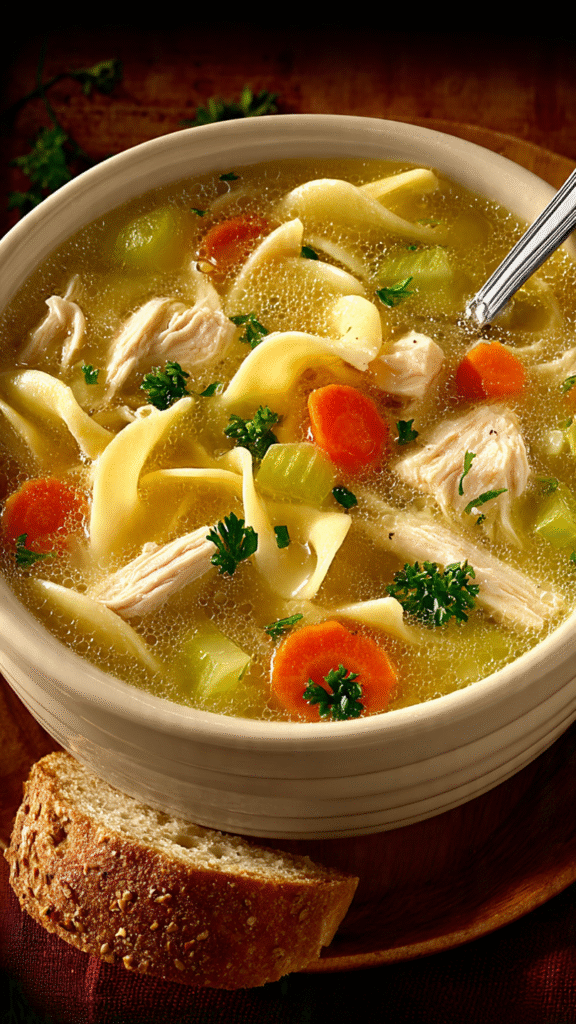
Bread Accompaniments: Crusty sourdough bread for dunking, warm dinner rolls for comfort, fresh focaccia for Mediterranean flair, or simple buttered bread for classic appeal. Bread soaks in the savory broth, creating complete satisfaction.
Beverage Pairings: White wine (Sauvignon Blanc or Pinot Grigio) pairs well without overpowering. Herbal tea (chamomile or sage) complements comforting qualities. Simple sparkling water with lemon refreshes between spoons.
Garnish Enhancements: Fresh parsley provides color and herbaceous notes. Fresh dill adds subtle anise flavor. Crispy croutons add texture contrast. Shredded cheddar cheese contributes richness. Lemon wedges allow diners to adjust brightness.
Side Dishes: Simple green salad cuts through richness. Steamed vegetables provide nutrition. Roasted root vegetables add heartiness.
Storage and Make-Ahead Strategies
Refrigerator Storage: Cool soup completely (approximately 2-3 hours) before transferring to airtight containers. Properly stored, homemade chicken noodle soup keeps 4-5 days in the refrigerator. Reheat gently over medium heat, stirring occasionally, adding broth if soup thickens.
Freezer Storage: Cool completely, transfer to freezer-safe containers with ½-inch headspace for expansion, label with contents and date, and freeze up to three months. Thaw in refrigerator overnight and reheat gently. The soup maintains quality beautifully through freezing.
Make-Ahead Preparation: Simmer chicken and prepare broth up to 24 hours ahead, storing in refrigerator. Prepare vegetables and store separately. Cook noodles on the day of serving for optimal texture, or prepare up to 8 hours ahead and store separately.
Nutritional Profile and Health Benefits
Per serving (based on eight servings): 285 calories, 28g protein, 8g fat, 28g carbohydrates, 2g fiber, and 720mg sodium.
Health Benefits: Homemade chicken provides complete protein with all essential amino acids. Bone broth contains collagen and gelatin supporting joint and gut health. Vegetables contribute vitamins, minerals, and phytonutrients. The warm liquid aids digestion and hydration. Unlike commercial versions, homemade soup contains no artificial ingredients, preservatives, or excessive sodium.
Troubleshooting Common Issues
Bland-Tasting Soup: Suggests insufficient seasoning or inadequate chicken simmering. Add salt gradually, tasting frequently. Ensure minimum 45 minutes simmering chicken. Add fresh lemon juice for brightness.
Mushy Noodles: Results from cooking noodles too long initially or extended final simmering. Cook noodles slightly underdone and add in final minutes of cooking.
Weak Chicken Flavor: Indicates insufficient simmering time or using skinless, boneless chicken. Use bone-in, skin-on chicken and simmer minimum 45 minutes.
Too Much Liquid: Reheat soup without lid, allowing some liquid to evaporate. Or serve in wider bowls with smaller portions of broth.
Conclusion
Mastering homemade chicken noodle soup provides more than a single recipe—it teaches fundamental cooking skills applicable across countless dishes. This timeless classic deserves regular preparation, offering comfort, nutrition, and satisfaction in every bowl. Begin with this recipe exactly as written, then develop confidence to adjust ratios, create variations, and make this soup entirely your own. The reward—grateful family members requesting seconds, friends asking for the recipe, and the knowledge that you’ve created something nourishing and meaningful—makes every minute of preparation worthwhile.