Easy Traditional Irish Soda Bread Recipe (No Yeast, Ready in 1 Hour)

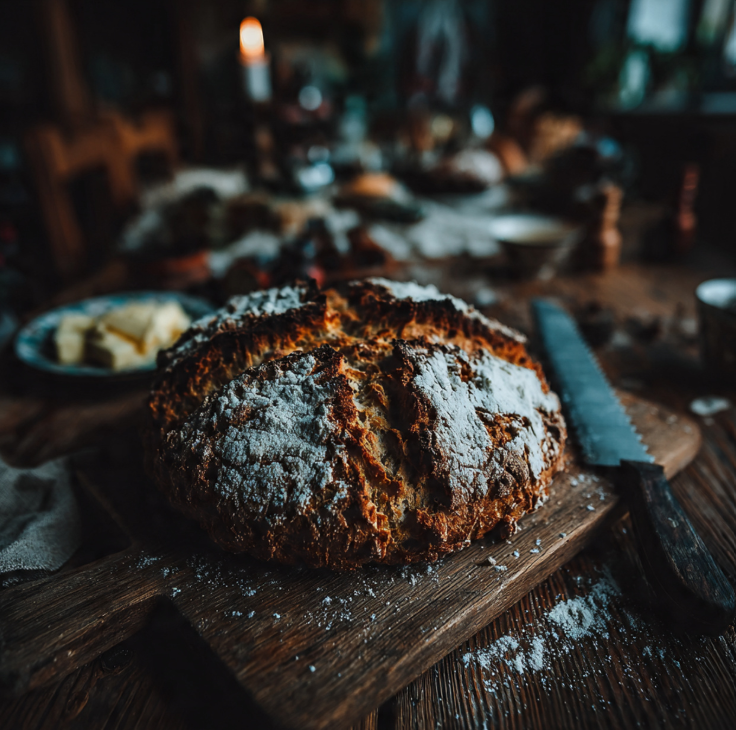
If you’re craving warm, homemade bread but don’t want to fuss with yeast, rising times, or kneading, this Irish soda bread recipe is about to be your new favorite. With a crisp, golden crust and a soft, tender interior, it comes together in minutes and bakes in about 40–45 minutes—perfect for last-minute dinners or St. Patrick’s Day celebrations.
Classic Irish soda bread is made with just a handful of pantry staples: flour, baking soda, salt, and buttermilk. No mixing, no proofing, no complicated techniques. You simply stir, shape, score, and bake. The result is a rustic loaf that’s amazing warm from the oven with butter, jam, or alongside a hearty soup or stew.
In this article, you’ll learn how to make a traditional Irish soda bread recipe, plus helpful tips, variations, and answers to common questions so your loaf turns out perfect every time.
Why You’ll Love This Irish Soda Bread Recipe
This easy Irish soda bread stands out for a few reasons:
- No yeast, no rising time: Baking soda and buttermilk do all the lifting—perfect for beginners.
- Ready in about an hour: From mixing the dough to slicing the loaf.
- Simple ingredients: Most are already in your pantry and fridge.
- Rustic and versatile: Great with butter, jam, cheese, soups, and stews.
- Foolproof for new bakers: No need to worry about kneading or proofing.
If you’ve been intimidated by baking bread, this easy Irish soda bread recipe is the ideal place to start.
Ingredients for Traditional Irish Soda Bread
Classic Irish soda bread uses just four core ingredients. This version includes a touch of sugar for flavor and browning, but you can leave it out for a more rustic loaf.
Basic Ingredients
- 4 cups (500 g) all-purpose flour
- 1 teaspoon baking soda
- 1 teaspoon fine salt
- 1–2 tablespoons granulated sugar (optional, but recommended)
- 1¾ to 2 cups (420–480 ml) buttermilk , cold
Optional Enrichment (For More Tenderness)
- 2 tablespoons cold unsalted butter , cut into small cubes (optional, for a softer crumb)
Tip: If you don’t have buttermilk, you can make a quick substitute (see the FAQ section).
How to Make Irish Soda Bread (Step-by-Step)
This Irish soda bread recipe comes together in one bowl with minimal handling. The key is to mix just enough to form a dough and get it into the oven quickly so the baking soda stays active.
Step 1: Preheat the Oven and Prepare the Pan
- Preheat your oven to 425°F (220°C) .
- Line a baking sheet with parchment paper or lightly flour a cast-iron skillet. Either works well for a rustic loaf.
Step 2: Mix the Dry Ingredients
- In a large mixing bowl, whisk together:
- Flour
- Baking soda
- Salt
- Sugar (if using)
- Make sure the baking soda is well distributed so the loaf rises evenly.
Step 3: Rub in the Butter (Optional)
If you’re using butter for a slightly richer, more tender loaf:
- Add the cold butter cubes to the dry ingredients.
- Use your fingertips to rub the butter into the flour mixture until it resembles coarse crumbs.
- You should still see some small pea-sized bits of butter.
If you want a lean, very traditional loaf, you can skip the butter entirely.
Step 4: Add the Buttermilk and Bring Dough Together

- Make a well in the center of the dry ingredients.
- Pour in 1¾ cups cold buttermilk .
- Using a wooden spoon or your hand formed into a claw, gently mix from the center out, pulling flour into the buttermilk until a shaggy, sticky dough forms.
If the dough seems too dry and floury at the bottom, add the remaining buttermilk 1 tablespoon at a time just until it comes together. It should be soft and slightly sticky but not a wet batter.
Important: Don’t overmix. Overworking the dough makes the bread tough.
Step 5: Shape the Loaf
- Turn the dough out onto a lightly floured surface .
- Gently knead no more than 5–8 times —just enough to bring it into a cohesive ball.
- Shape it into a round loaf , about 7–8 inches in diameter and roughly 1½–2 inches high.
- Transfer the round to your prepared baking sheet or skillet.
Step 6: Score the Cross
- Using a sharp knife or bread blade, cut a deep cross on top of the loaf:
- Each line should be about ½–¾ inch deep and extend almost to the edges.
This traditional cross isn’t just decorative—it helps the heat reach the center of the loaf, allowing it to bake evenly and rise properly.
Step 7: Bake the Irish Soda Bread
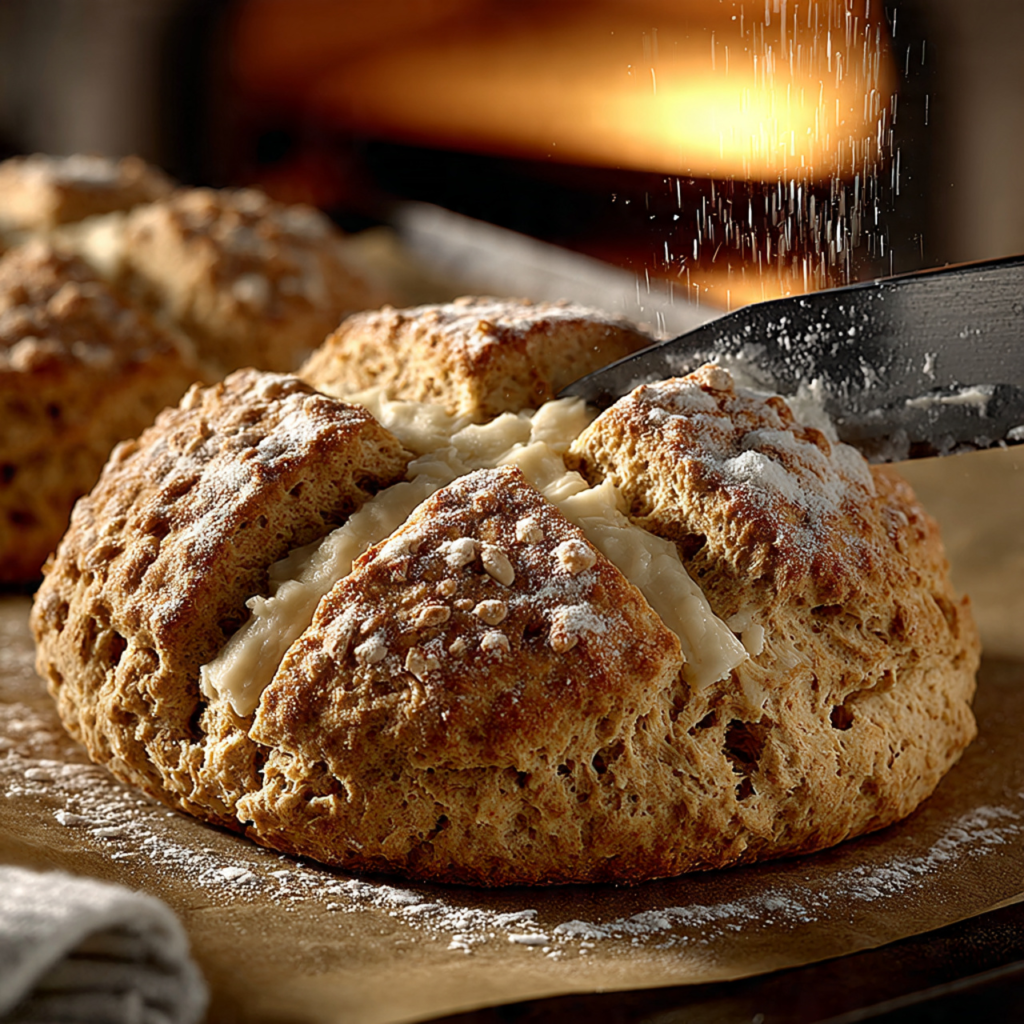
- Place the loaf in the preheated 425°F (220°C) oven.
- Bake for 35–45 minutes , until:
- The bread is deep golden brown,
- It sounds hollow when tapped on the bottom, and
- A skewer or knife inserted into the center comes out clean.
If the top is browning too quickly while the center is still underdone, tent loosely with foil for the last 10 minutes of baking.
Step 8: Cool Before Slicing
- Let the loaf cool on a wire rack for at least 30 minutes before slicing.
- Slice with a serrated bread knife for clean pieces.
Irish soda bread is best served slightly warm with plenty of butter.
Tips for the Best Irish Soda Bread
Getting this Irish soda bread recipe just right is all about a few simple techniques:
- Use fresh baking soda: Old baking soda loses strength and can lead to a dense loaf.
- Don’t overwork the dough: Treat it more like a scone dough than a yeast bread. Light handling keeps it tender.
- Work quickly: Once the buttermilk meets the baking soda, the reaction starts. Get the dough mixed, shaped, and into the oven promptly.
- Don’t overbake: Start checking at 35 minutes. Overbaking will dry out the bread.
- Cool before slicing: Cutting too soon can make the interior gummy.
Variations on Irish Soda Bread
Once you’ve mastered this basic Irish soda bread recipe , try some fun variations:
1. Raisin or “Spotted Dog” Soda Bread
- Add ½–¾ cup raisins or currants to the dry ingredients before adding buttermilk.
- Optionally increase sugar to 3–4 tablespoons for a lightly sweet loaf.
2. Whole Wheat Irish Soda Bread
- Use 2 cups all-purpose flour + 2 cups whole wheat flour .
- You may need an extra tablespoon or two of buttermilk since whole wheat absorbs more liquid.
3. Seeded Soda Bread
- Stir in 2–4 tablespoons mixed seeds (sunflower, pumpkin, sesame, flax) for nutty flavor and extra texture.
4. Cheddar and Herb Soda Bread
- Add 1 cup shredded sharp cheddar and 2–3 tablespoons chopped fresh herbs (like chives, parsley, or thyme) to the dry ingredients.
- This version is incredible served with soup or chili.
What to Serve with Irish Soda Bread
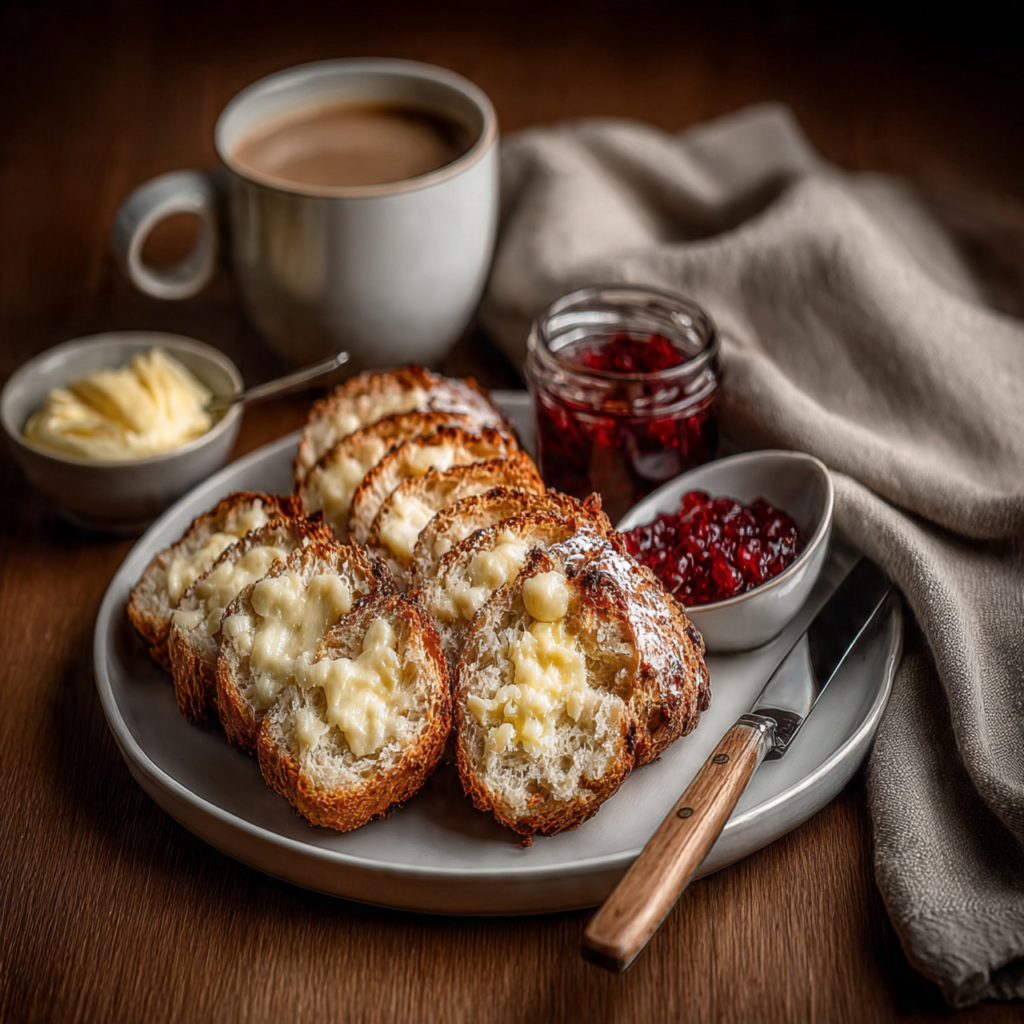
Irish soda bread is incredibly versatile and pairs well with many dishes:
- With butter and jam: Classic and simple, perfect for breakfast or afternoon tea.
- Alongside soup or stew: Ideal with beef stew, vegetable soup, or chowder.
- With cheese and cold cuts: Serve slices as part of a rustic cheese board.
- To mop up sauces: Great with hearty, saucy dishes that need something to soak up the goodness.
Serve it warm if you can—just lightly reheat slices in the oven or toaster if made ahead.
How to Store and Freeze Irish Soda Bread
Because soda bread has no preservatives and is at its best fresh, proper storage is important.
Room Temperature
- Let the loaf cool completely.
- Wrap tightly in plastic wrap or store in an airtight container.
- Best enjoyed within 1–2 days for peak freshness.
Freezer
- Wrap the whole loaf or individual slices in plastic wrap, then in foil or a freezer bag.
- Freeze for up to 2–3 months .
- Thaw at room temperature, then refresh in a 325°F (165°C) oven for 8–10 minutes, or toast slices as needed.
Frequently Asked Questions
What is Irish soda bread made of?
Traditional Irish soda bread is made from flour, baking soda, salt, and buttermilk . This basic recipe may include a little sugar or butter, but yeast is never used.
Can I make Irish soda bread without buttermilk?
Yes. You can make a quick substitute:
- Add 2 tablespoons lemon juice or white vinegar to a measuring jug, then fill with milk to 2 cups .
- Let it sit for 5–10 minutes until slightly thickened and curdled.
This works similarly to buttermilk in the recipe.
Why is my soda bread dense?
Common reasons include:
- Overmixing or overkneading the dough
- Using old baking soda
- Not enough buttermilk (dough too dry)
- Letting the dough sit too long before baking
Is Irish soda bread supposed to be sweet?
Traditional versions are not very sweet —more savory and rustic. This recipe uses a small amount of sugar mainly for flavor and browning, but you can reduce or omit it if you prefer.
Can I bake it in a cast-iron skillet?
Absolutely. A cast-iron skillet works wonderfully and helps create a crisp, evenly browned crust. Just lightly grease or dust with flour before adding the dough.
Final Thoughts
This Irish soda bread recipe proves that homemade bread doesn’t need to be complicated. With no yeast, no long rising times, and just a handful of ingredients, you get a rustic, golden loaf in about an hour—perfect for everyday meals or special occasions.
Whether you serve it with butter and jam, alongside a hearty stew, or as part of a St. Patrick’s Day spread, this easy Irish soda bread is sure to become a staple in your kitchen.