
Baked Potato Soup: Complete Recipe and Cooking Guide

Baked potato soup stands as one of the most beloved comfort soups—a creamy, hearty dish that delivers profound satisfaction with every spoonful. This comprehensive guide teaches you how to create authentic, deeply satisfying baked potato soup from scratch that far surpasses any restaurant version. Whether you’re seeking a quick weeknight dinner, preparing nourishing meals for entertaining guests, or looking for a make-ahead comfort food, this detailed recipe delivers consistent, professional-quality results.
Why Baked Potato Soup Deserves Your Attention
Baked potato soup’s universal appeal stems from multiple compelling reasons. First, it represents ultimate comfort—the creamy broth, tender potatoes, and crispy bacon toppings create an emotionally satisfying experience. Second, it’s remarkably versatile, adapting beautifully to different ingredients, preferences, and dietary requirements. Third, homemade versions dramatically exceed restaurant alternatives in flavor, texture, and quality.
The health benefits are substantial. Potatoes provide complex carbohydrates, potassium, and vitamin C supporting sustained energy and immune function. Cheese contributes calcium and protein. Sour cream provides probiotics and fat-soluble vitamins. Fresh chives add antioxidants. The warm liquid aids digestion and supports hydration. Unlike commercial versions heavy with cream and sodium, homemade baked potato soup offers balanced nutrition with clean, whole ingredients.
The sensory experience enhances the eating pleasure. The aroma of baking potatoes and crispy bacon creates anticipation. The creamy broth contrasts with crispy bacon and cheddar cheese toppings. The flavor complexity from properly roasted potatoes surpasses boiled versions. The satisfaction of creating something nourishing from scratch builds confidence and cooking mastery.
Essential Ingredients and Their Roles
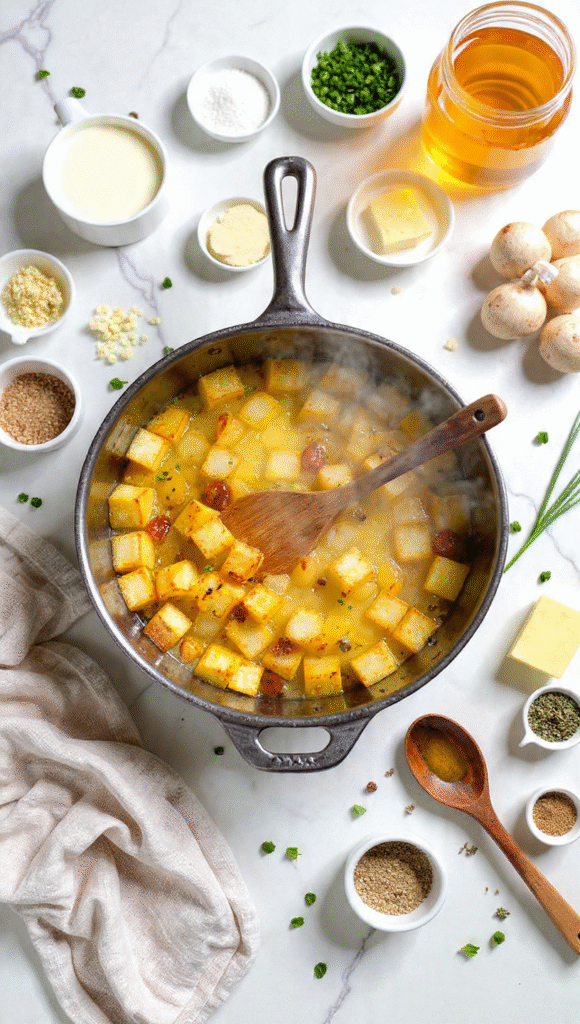
The Potato Foundation: Use 2.5-3 pounds russet potatoes—the starch content creates natural creaminess. Baking (not boiling) intensifies potato flavor through caramelization. Cut potatoes into ¾-inch cubes for even cooking. The potato skin adds nutrients and texture, though you can peel if preferred.
The Aromatic Vegetable Base: One large yellow onion diced, six cloves fresh garlic minced, and optional four ounces mushrooms sliced create the flavor foundation. These vegetables are sautéed in butter before adding broth, developing natural sugars and building complex flavor layers.
The Broth and Liquid: Six cups of low-sodium chicken broth combined with reserved potato cooking liquid (if baking) or additional broth creates the soup’s foundation. Using low-sodium broth allows seasoning control essential for balanced flavor.
The Cream Component: One cup heavy cream or half-and-half creates the signature creamy texture. For lighter versions, substitute with evaporated milk or additional broth. Two tablespoons butter enriches the broth and adds richness.
The Cheese and Toppings: Two cups sharp cheddar cheese (shredded) provides bold flavor and creaminess. Crispy bacon (6-8 slices), fresh chives (½ cup chopped), and optional sour cream create textural contrast and flavor complexity. Additional toppings include shredded sharp cheddar for garnish.
Seasonings: Kosher salt, freshly ground black pepper, dried thyme, and fresh parsley create aromatic depth. Optional additions include smoked paprika for depth, garlic powder for intensity, or cayenne pepper for heat.
Complete Baked Potato Soup Recipe
Ingredients
Potato Base:
- 2.5-3 lbs russet potatoes, cut into ¾-inch cubes
- 2 tablespoons olive oil
- Salt and pepper to taste
Aromatics and Broth:
- 2 tablespoons butter
- 1 large yellow onion, diced
- 6 cloves fresh garlic, minced
- 4 oz mushrooms, sliced (optional)
- 6 cups low-sodium chicken broth
- 1 teaspoon dried thyme
Cream and Cheese:
- 1 cup heavy cream (or half-and-half for lighter version)
- 2 cups sharp cheddar cheese, shredded
- 2 tablespoons butter (for enriching)
Toppings and Finishing:
- 6-8 slices bacon, cooked and crumbled
- ½ cup fresh chives, chopped
- ¼ cup sour cream (optional, for serving)
- ¼ cup fresh parsley, chopped
- 1 teaspoon kosher salt (adjust to taste)
- ½ teaspoon freshly ground black pepper
- ⅛ teaspoon cayenne pepper (optional)
Optional Flavor Additions:
- 1 tablespoon fresh dill
- ½ teaspoon smoked paprika
- 1 teaspoon garlic powder
- ½ teaspoon paprika
Instructions
Phase 1: Preparing and Roasting Potatoes
- Preheat Oven: Set oven to 400°F (200°C). Line a large baking sheet with parchment paper.
- Prepare Potatoes: Wash and peel potatoes if desired (leaving skin adds nutrients). Cut into ¾-inch cubes for even cooking and proper texture.
- Season and Oil: Toss potatoes with two tablespoons olive oil, one teaspoon kosher salt, and ½ teaspoon black pepper. Spread evenly on prepared baking sheet.
- Roast Potatoes: Bake for 25-30 minutes until potatoes are tender with slightly caramelized edges. Stir halfway through cooking for even browning and optimal texture development.
- Cool Slightly: Remove from oven and allow to cool for 5 minutes before adding to soup.
Phase 2: Building the Flavor Base
- Cook Bacon: While potatoes roast, cook bacon strips in a skillet over medium heat until crispy (approximately 8-10 minutes). Transfer to paper towel-lined plate. Once cooled, crumble into bite-sized pieces and set aside.
- Sauté Aromatics: In a large Dutch oven, melt two tablespoons butter over medium heat. Add diced onion and cook for three minutes until beginning to soften. Add minced garlic and mushrooms (if using), cooking for an additional two minutes until fragrant.
- Add Broth: Pour six cups low-sodium chicken broth into the pot with aromatics. Add one teaspoon dried thyme and stir well.
Phase 3: Combining Components
- Add Roasted Potatoes: Transfer roasted potatoes from baking sheet to the broth. Stir gently to combine, ensuring potatoes are submerged and distributed throughout.
- Bring to Simmer: Increase heat to medium-high and bring to gentle boil. Once boiling, reduce heat to medium-low and maintain gentle simmer for 10-15 minutes, allowing flavors to meld.
- Create Creamy Texture: Using a potato masher or immersion blender, partially mash or blend the soup to achieve desired consistency. For chunkier soup, mash lightly and briefly. For creamier soup, blend approximately one-third of the mixture until smooth.
Phase 4: Adding Cream and Cheese
- Reduce Heat to Low: Turn heat to low setting, ensuring soup won’t boil vigorously when cream is added.
- Add Cream: Stir in one cup heavy cream (or half-and-half for lighter version) slowly, mixing thoroughly to combine evenly.
- Add Cheese: Gradually add two cups shredded sharp cheddar cheese, stirring constantly until completely melted and incorporated. Do not boil, as high heat can cause separation.
- Enrich with Butter: Add two tablespoons butter, stirring until melted and distributed throughout the soup, creating richness and silky mouthfeel.
Phase 5: Seasoning and Finishing
- Season Carefully: Taste the soup and adjust seasoning by adding kosher salt and black pepper gradually. Remember that cheese and broth already contribute sodium—add conservatively.
- Add Optional Seasonings: If desired, add ½ teaspoon smoked paprika for depth, 1 teaspoon garlic powder for intensity, or ⅛ teaspoon cayenne pepper for subtle heat.
- Final Adjustments: Taste again, ensuring balanced, well-seasoned flavor. The soup should taste rich, creamy, savory, and deeply satisfying.
- Add Fresh Herbs: Remove from heat. Fold in ¼ cup fresh chopped parsley and ½ cup fresh chopped chives just before serving. Fresh herbs preserve color and aromatic qualities when added at the end.
Phase 6: Serving
- Ladle Into Bowls: Pour soup into warmed bowls, filling approximately three-quarters full.
- Add Toppings: Sprinkle crumbled bacon generously over each bowl. Add additional fresh chives for color and flavor. Optional: top with one tablespoon sour cream and additional shredded cheddar cheese.
- Serve Immediately: Serve while hot, allowing steam to rise and aroma to enhance the dining experience.
Cooking Time Summary:
- Roasting potatoes: 25-30 minutes
- Cooking bacon: 8-10 minutes
- Sautéing aromatics: 5 minutes
- Simmering soup: 10-15 minutes
- Finishing and seasoning: 3-5 minutes
- Total Active Cooking Time: 35-40 minutes
- Total Time (including roasting): 65-80 minutes
Professional Cooking Techniques
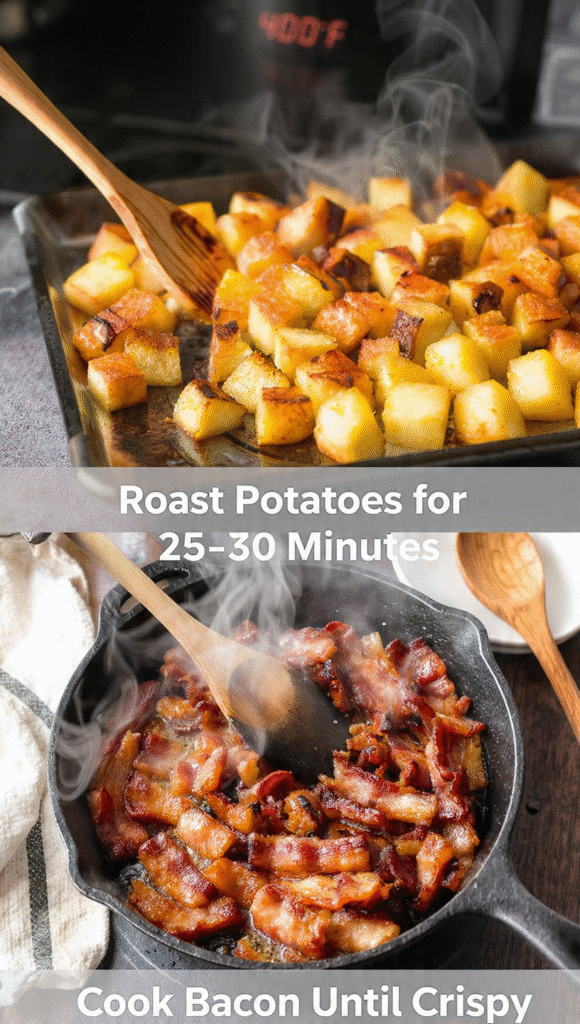
Roasting vs. Boiling Potatoes: The key to exceptional baked potato soup lies in roasting rather than boiling potatoes. Roasting concentrates potato flavor through caramelization, creates tender interior with slightly crispy edges, and prevents waterlogged texture. Boiling dilutes potato flavor and creates mushy consistency. Roasting is non-negotiable for superior results.
Creating Creamy Texture Without Excessive Cream: Using a potato masher to partially break down potatoes releases natural starch, creating creaminess without needing excessive cream. This technique reduces dairy requirements by 25-50% while maintaining luxurious mouthfeel. The result is lighter soup with better potato flavor.
Layering Flavors Through Technique: Unlike dumping ingredients simultaneously, this recipe builds flavor through layering. Roasting potatoes creates the foundation. Sautéing aromatics in butter develops natural sugars. Simmering allows flavors to meld. Adding cream and cheese near the end creates richness without cooking off delicate flavors.
Achieving Perfect Temperature for Cream: Adding heavy cream to boiling liquid causes separation and scorching. Maintaining low heat and gradual addition prevents these issues. The soup should steam gently, not bubble vigorously.
Creative Variations and Adaptations
Loaded Baked Potato Soup Deluxe: Add one cup corn kernels, ½ cup diced green onions, and extra crispy bacon pieces. Top with additional cheddar cheese, bacon, and sour cream for restaurant-style loaded baked potato experience.
Broccoli Cheddar Potato Soup: Add two cups fresh broccoli florets (chopped into small pieces) near the end, cooking for 3-5 minutes until tender but still vibrant. Increase cheddar to 2.5 cups for bold cheese flavor.
Jalapeño Cheddar Bacon Potato Soup: Add two diced jalapeños (seeds removed for less heat) when sautéing aromatics. Include ½ teaspoon smoked paprika and increase cheddar to 2.5 cups. Serve with cilantro instead of parsley for Mexican-inspired variation.
Creamy Roasted Garlic Potato Soup: Roast one entire head of garlic with the potatoes, then squeeze the soft garlic cloves into the soup, creating deep, mellow garlic flavor. Reduce fresh garlic to two cloves for balance.
Lighter Cauliflower Potato Soup: Replace one pound potatoes with two cups cauliflower florets. Reduce cream to ¾ cup and use half-and-half or evaporated milk. Reduce cheese to 1.5 cups for lighter version maintaining excellent flavor.
Bacon Blue Cheese Potato Soup: Use crumbled blue cheese (1.5 cups) instead of cheddar. Include crispy bacon prominently. Add one tablespoon fresh thyme for herbaceous notes. This sophisticated variation appeals to cheese lovers.
Serving Suggestions and Pairings
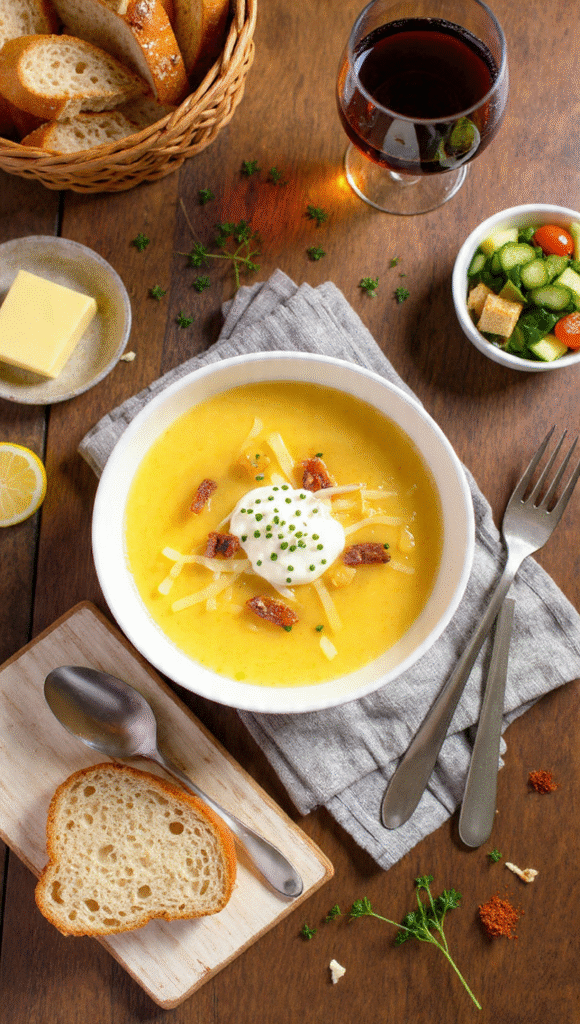
Traditional Toppings: Crispy bacon pieces (essential), fresh chives (color and flavor), shredded sharp cheddar (richness), and sour cream dollop (creaminess and tang) create the classic loaded baked potato combination.
Bread Accompaniments: Crusty sourdough bread for dunking, warm dinner rolls for comfort, cornbread for Southern appeal, or garlic bread for additional flavor all complement the soup beautifully.
Beverage Pairings: Light white wine (Sauvignon Blanc or Pinot Grigio) pairs well without overpowering. Crisp lagers or pale ales complement the creamy soup. Herbal tea (sage or thyme) provides digestive benefits.
Side Dishes: Simple green salad with vinaigrette cuts through richness. Steamed broccoli or roasted Brussels sprouts provide vegetable nutrition. Roasted asparagus adds elegance to casual meals.
Storage and Make-Ahead Strategies
Refrigerator Storage: Cool soup completely (approximately 2-3 hours) before transferring to airtight containers. Properly stored, baked potato soup keeps 4-5 days in the refrigerator. Reheat gently over medium heat, stirring occasionally, adding broth if soup thickens during storage.
Freezer Storage: Cool completely, transfer to freezer-safe containers with ½-inch headspace for expansion, label with contents and date, and freeze up to three months. Thaw in refrigerator overnight and reheat gently. Cream-based soups maintain excellent quality through freezing.
Make-Ahead Preparation: Roast potatoes up to 24 hours ahead, storing in refrigerator. Prepare bacon and vegetables the morning of serving. Complete soup assembly takes approximately 40 minutes. This approach reduces cooking day stress while maintaining fresh flavors.
Troubleshooting Common Issues
Soup Too Thick: Add additional broth ¼ cup at a time until reaching desired consistency.
Soup Too Thin: Mash additional potatoes against the pot’s side to release starch and thicken naturally.
Bland-Tasting Soup: Add kosher salt gradually, tasting frequently. Ensure potatoes were properly roasted (developing flavor).
Separated or Grainy Texture: Resulted from boiling cream. Prevent by maintaining low heat and gradual cream addition. If occurred, immersion blend briefly to restore smoothness.
Potatoes Undercooked: Extend roasting time by 5-10 minutes until completely tender with slightly caramelized edges.
Conclusion
Mastering baked potato soup provides more than a single recipe—it teaches fundamental cooking techniques applicable across countless dishes. This comfort food classic deserves regular preparation, offering satisfaction, nutrition, and warmth in every spoonful. Begin with this recipe exactly as written, then develop confidence to adjust ratios, create variations, and make this soup entirely your own. The reward—grateful family members requesting seconds and friends asking for the recipe—makes every minute of preparation worthwhile.