Baked Cod in Coconut Lemon Cream Sauce: Easy Restaurant Recipe

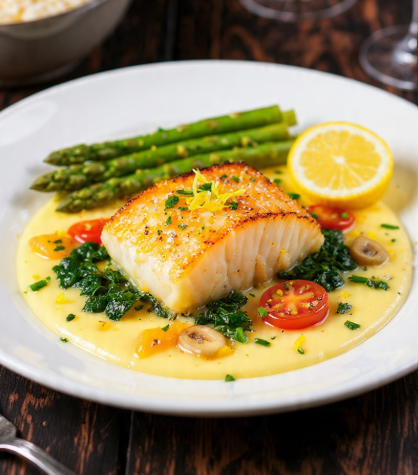
Baked cod in coconut lemon cream sauce represents an elegant, restaurant-quality seafood dish that’s surprisingly easy to prepare at home. This comprehensive guide teaches you how to create this sophisticated yet approachable baked cod recipe that combines delicate white fish with tropical coconut flavors and bright citrus notes. Whether you’re seeking an impressive dinner for entertaining guests, preparing a healthy weeknight meal, or looking to expand your seafood cooking repertoire, this detailed recipe delivers consistent, professional-quality results.
Why Baked Cod in Coconut Lemon Cream Sauce Deserves Your Attention
The health benefits are substantial. Cod provides lean protein supporting muscle health and metabolism. It contains omega-3 fatty acids supporting heart and brain health. Coconut milk offers medium-chain triglycerides (MCTs) providing quick energy. Lemon juice aids digestion and vitamin C absorption. Unlike heavy cream-based dishes, this recipe balances indulgence with nutrition. Fresh vegetables add fiber, vitamins, and antioxidants. This single dish provides balanced nutrition meeting multiple daily requirements.
The versatility is remarkable. Baked cod in coconut lemon cream sauce adapts beautifully to different vegetables, serves with various side dishes, accommodates dietary restrictions through ingredient substitutions, and works equally well for casual family dinners or formal entertaining. The elegant presentation impresses guests without requiring advanced culinary skills. The cooking technique—baking in parchment (en papillote) or covered baking dish—ensures moist, perfectly cooked fish every time.
Essential Ingredients and Their Roles
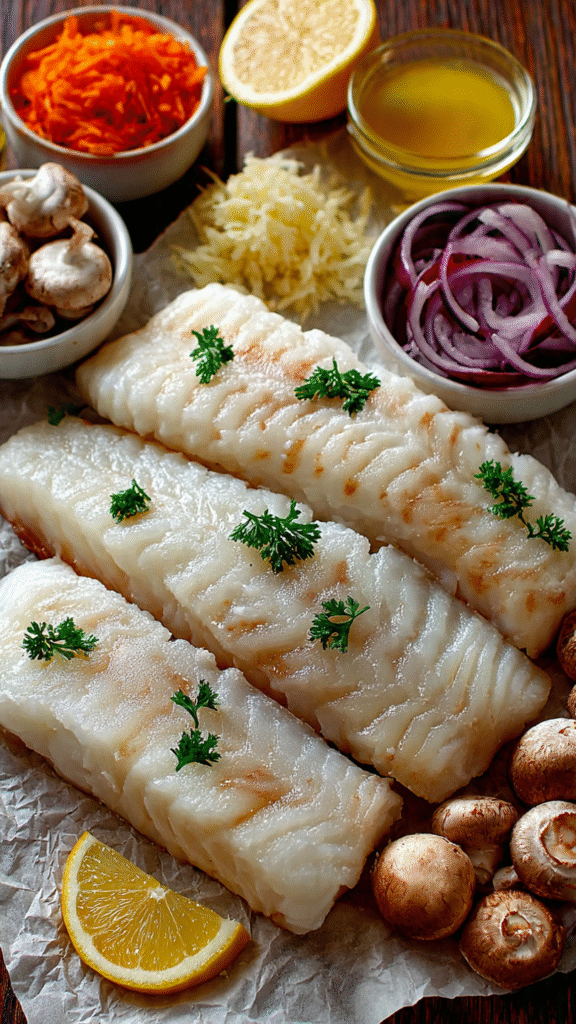
The Cod Foundation: Use four 6-ounce cod fillets (or other white fish like halibut, sea bass, or tilapia). Fresh, high-quality cod is essential—look for firm, translucent flesh with no strong fishy odor. Pat fillets dry before cooking, which promotes better browning and prevents excess moisture. Cod’s mild flavor complements bold sauce flavors while remaining the dish’s focal point.
The Aromatic Vegetable Base: One medium yellow onion thinly sliced, three cloves fresh garlic minced, and optional eight ounces mushrooms sliced create the flavor foundation. These vegetables are sautéed in butter or olive oil, developing natural sugars and aromatic compounds that enhance the sauce.
The Coconut Lemon Cream Sauce: One cup full-fat coconut milk creates tropical richness, ½ cup heavy cream adds silky texture, juice of two fresh lemons provides bright acidity and complexity, and ¼ cup dry white wine (optional) adds depth. The combination balances richness with brightness, creating sophisticated flavor not possible with any single component.
Seasonings and Finishing: Kosher salt, freshly ground black pepper, optional fresh herbs (cilantro, basil, or dill), and fresh lemon zest create aromatic depth and visual appeal. Optional additions include crushed red pepper flakes for heat, fresh thyme for herbaceous notes, or capers for briny complexity.
Vegetables for Baking: Optional but recommended vegetables include fresh spinach (two cups), cherry tomatoes (one cup halved), asparagus (one pound trimmed), or bell peppers (one large, sliced). These vegetables cook with the cod, adding nutrition, color, and flavor while reducing prep work.
Complete Baked Cod in Coconut Lemon Cream Sauce Recipe
Ingredients
Cod and Vegetables:
- 4 cod fillets (6 oz each)
- 2 tablespoons olive oil or butter
- Salt and pepper to taste
- 2 cups fresh baby spinach (optional)
- 1 cup cherry tomatoes, halved
Aromatic Base:
- 2 tablespoons butter
- 1 medium yellow onion, thinly sliced
- 3 cloves fresh garlic, minced
- 8 oz mushrooms, sliced (optional)
Coconut Lemon Cream Sauce:
- 1 cup full-fat coconut milk
- ½ cup heavy cream
- Juice of 2 fresh lemons (approximately ¼ cup)
- ¼ cup dry white wine (optional)
- 1 tablespoon butter (for enriching)
- 1 teaspoon kosher salt (adjust to taste)
- ½ teaspoon freshly ground black pepper
Seasonings and Finishing:
- Zest of 1 fresh lemon
- ¼ cup fresh cilantro or basil, chopped
- ⅛ teaspoon cayenne pepper (optional)
- ½ teaspoon fresh thyme (or dried)
Instructions
Phase 1: Preparing Ingredients
- Preheat Oven: Set oven to 400°F (200°C). Line a large baking sheet with parchment paper or lightly oil a shallow baking dish.
- Prepare Cod: Pat cod fillets dry with paper towels (removes excess moisture, promoting better texture). Season on both sides with kosher salt and freshly ground black pepper.
- Prepare Vegetables: Thinly slice onion, mince garlic, and slice mushrooms (if using). Halve cherry tomatoes. Chop fresh spinach or herbs as needed.
Phase 2: Creating the Aromatic Base
- Sauté Aromatics: In a large skillet, melt two tablespoons butter over medium heat. Add sliced onion and cook for three minutes until beginning to soften and become translucent.
- Add Garlic and Mushrooms: Add minced garlic and sliced mushrooms (if using), cooking for an additional two minutes until fragrant. The mushrooms will begin releasing moisture.
- Optional Wine Reduction: If using dry white wine, add ¼ cup now, allowing it to simmer for one minute to reduce slightly and concentrate flavor.
Phase 3: Creating the Sauce
- Combine Cream Ingredients: In a small bowl or measuring cup, whisk together one cup coconut milk and ½ cup heavy cream until well combined and smooth.
- Add Sauce to Skillet: Pour the coconut cream mixture into the skillet with aromatics, stirring constantly to combine evenly. The mixture will take on a pale, creamy golden color.
- Add Lemon Juice Gradually: Add juice of one fresh lemon (approximately 2 tablespoons) to the sauce, stirring well. The sauce will brighten noticeably.
- Simmer Sauce Briefly: Allow the sauce to simmer gently for two minutes over medium-low heat. Do not boil, as high heat can cause coconut milk to separate or curdle.
- Season the Sauce: Add one teaspoon kosher salt and ½ teaspoon black pepper to the sauce. Taste and adjust, remembering that the cod and vegetables will add additional flavor.
Phase 4: Assembling the Dish
- Spread Aromatics: Transfer half of the sautéed onion-mushroom mixture to the prepared baking sheet or baking dish, spreading evenly to create a bed for the cod.
- Arrange Cod: Place prepared cod fillets on top of the aromatic bed, spacing them evenly. The fillets should not touch each other.
- Add Vegetables: Around and on top of the cod, distribute fresh spinach (if using) and halved cherry tomatoes.
- Pour Sauce: Carefully pour the coconut lemon cream sauce over the cod and vegetables, ensuring each fillet is partially surrounded by sauce. The sauce should partially cover the cod but not completely submerge it.
- Top with Remaining Aromatics: Distribute the remaining sautéed onion-mushroom mixture over the cod and vegetables for additional flavor and texture.
Phase 5: Baking
- Cover and Bake: Cover the baking sheet with aluminum foil (shiny side down) or use a baking dish cover. This traps steam, ensuring moist, perfectly cooked cod.
- Bake Covered: Place in preheated 400°F oven and bake for 12-15 minutes. The fish will be opaque and begin flaking easily with a fork when done. Do not overbake, as overcooked fish becomes dry and tough.
- Check for Doneness: At 12 minutes, insert a fork into the thickest part of a cod fillet. The fish should flake easily and show no translucent areas. Internal temperature should reach 145°F (63°C).
Phase 6: Finishing and Serving
- Remove Foil: Carefully remove foil (watch for escaping steam), allowing the beautiful presentation to be revealed.
- Add Final Seasonings: Scatter fresh cilantro or basil across the entire dish. Add lemon zest for brightness and visual appeal. Optional: drizzle with additional lemon juice for enhanced brightness.
- Enrich the Sauce: Stir one tablespoon butter into the sauce (off-heat) for silky, luxurious mouthfeel. The butter creates a glossy appearance and improves texture.
- Serve Immediately: Carefully plate individual portions, ensuring each serving includes cod, sauce, vegetables, and aromatics. Serve immediately while hot and aromatic.
Cooking Time Summary:
- Ingredient preparation: 10 minutes
- Sautéing aromatics: 5 minutes
- Creating sauce: 3 minutes
- Assembling dish: 5 minutes
- Baking: 12-15 minutes
- Total Active Cooking Time: 25-35 minutes
- Total Time (including baking): 40-50 minutes
Professional Cooking Techniques
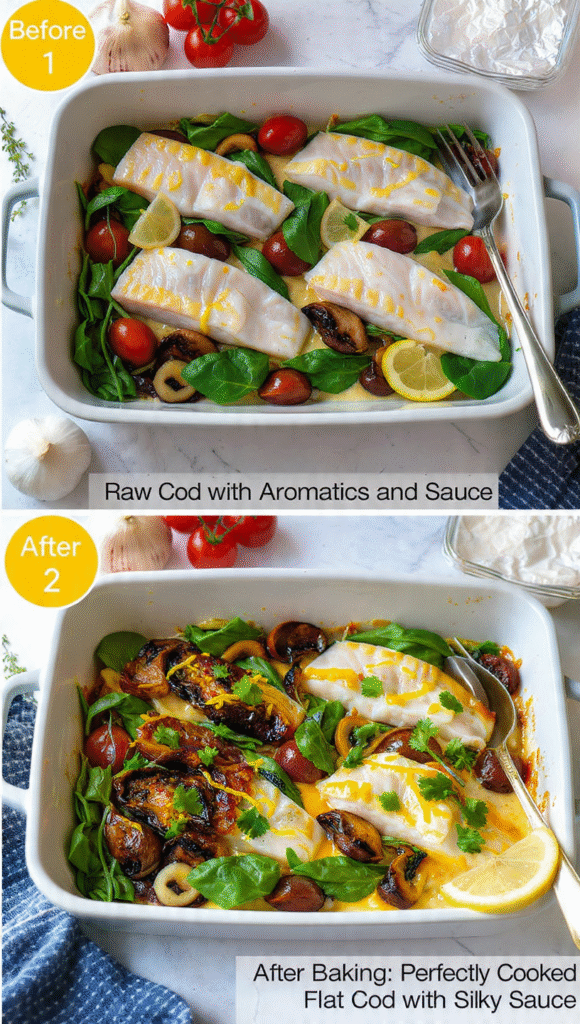
Achieving Perfectly Cooked Cod: The key to exceptional baked cod lies in avoiding overcooking. Cod is lean fish with minimal fat content—overcooking results in dry, flaky texture. Baking covered at 400°F ensures gentle, even cooking. The fish should reach exactly 145°F internal temperature, no more. Using a meat thermometer eliminates guesswork.
Creating Silky Coconut Cream Sauce: The balance between coconut milk and heavy cream is critical. Coconut milk alone is too thick; heavy cream alone lacks tropical character. The combination creates velvety sauce with depth. Adding lemon juice near the end preserves brightness—adding too early allows acidity to cook off. The final butter enrichment creates glossy appearance and luxurious mouthfeel.
Building Balanced Flavor: This dish demonstrates flavor balancing through contrast. Coconut provides richness and tropical sweetness. Lemon provides brightness and acidity. Garlic and onion provide savory depth. Herbs provide freshness. Each component plays a role—no single flavor dominates. This balance distinguishes this dish from simpler preparations.
Proper Baking Temperature: 400°F is optimal for baked cod. Lower temperatures (350°F) require extended cooking, risking overcooking. Higher temperatures (425°F+) can scorch sauce edges while leaving fish undercooked. 400°F provides perfect balance—sauce simmers gently while fish cooks through evenly.
Creative Variations and Adaptations
Thai-Inspired Baked Cod: Add one tablespoon Thai red curry paste to the sauce, reduce lemon to one lemon, add two tablespoons fish sauce, and include fresh Thai basil as garnish. Serve with jasmine rice for authentic flavor profile.
Mediterranean Baked Cod: Replace coconut milk with chicken broth, keep lemon, add one tablespoon capers, include fresh oregano and thyme, and add halved olives. Include cherry tomatoes prominently for Mediterranean color and flavor.
Asian Ginger Coconut Cod: Add one tablespoon fresh ginger (minced) to aromatics, include one tablespoon soy sauce in the sauce, add lime juice instead of lemon, and garnish with cilantro and sesame seeds. Serve with steamed bok choy for Asian-inspired meal.
Spinach and Feta Baked Cod: Include two cups fresh spinach in the aromatic bed, crumble one cup feta cheese over cod before baking, reduce coconut milk to ¾ cup, and add one cup chicken broth. The feta creates briny, salty contrast to coconut sweetness.
Lighter Tomato Basil Cod: Replace coconut milk with chicken broth, reduce heavy cream to ¼ cup, use fresh tomato sauce (one cup) as base, include fresh basil prominently, and reduce lemon to one lemon. This creates lighter, fresher preparation.
Creamy Garlic Butter Cod: Replace coconut milk with chicken broth, increase butter to three tablespoons, add four minced garlic cloves to aromatics, reduce lemon to one tablespoon, and include fresh parsley. This creates classic French-inspired preparation.
Serving Suggestions and Perfect Pairings
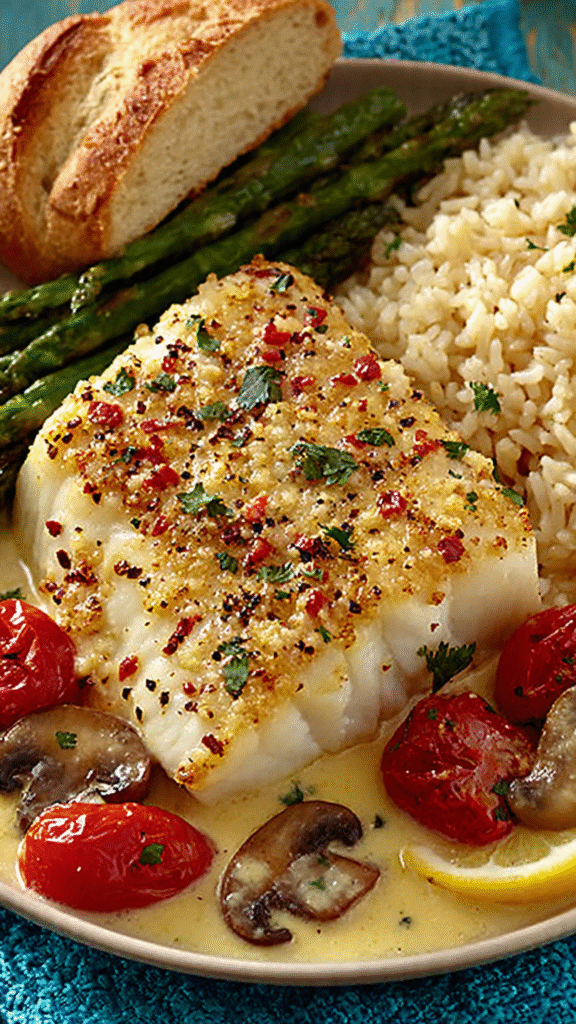
Rice Accompaniments: Jasmine rice absorbs sauce beautifully and provides neutral base. Coconut rice complements coconut sauce naturally. Brown rice provides nutty flavor and nutritional benefits. Cilantro-lime rice adds brightness.
Vegetable Side Dishes: Steamed asparagus with lemon butter provides elegant accompaniment. Roasted broccoli adds nutrition and texture. Sautéed green beans with garlic complement the dish. Simple garden salad cuts through richness with acidity and freshness.
Bread Options: Crusty sourdough bread soaks up sauce beautifully. Garlic bread adds complementary flavors. Simple butter rolls provide comforting contrast. Grilled flatbread works well for casual presentations.
Beverage Pairings: Crisp white wine (Sauvignon Blanc, Pinot Grigio) pairs perfectly without overpowering delicate fish. Light rosé provides elegant option. Sparkling water with lemon complements the bright lemon flavors. Herbal tea provides digestive benefits.
Storage and Make-Ahead Strategies
Refrigerator Storage: Cool dish completely (approximately 30 minutes) before transferring to airtight containers. Properly stored, baked cod keeps 3-4 days in the refrigerator. Reheat gently in 300°F oven for 8-10 minutes until warmed through. Avoid microwave reheating, which can overcook fish further.
Freezer Storage: Cool completely, transfer to freezer-safe containers with ½-inch headspace, and freeze up to one month. Longer freezing (beyond one month) can affect fish texture. Thaw in refrigerator overnight and reheat gently.
Make-Ahead Preparation: Prepare sauce and aromatics up to eight hours ahead, storing separately in refrigerator. Pat cod dry and prepare vegetables on the day of serving. Assembly and baking takes only 25-30 minutes, making this perfect for entertaining.
Troubleshooting Common Issues
Fish Is Dry or Overcooked: Resulted from excessive baking time or high temperature. Prevent by using meat thermometer and removing at exactly 145°F.
Sauce Is Separated or Grainy: Resulted from high heat causing coconut milk to curdle. Prevent by maintaining medium-low heat and avoiding boiling.
Fish Tastes Bland: Indicates insufficient seasoning or poor-quality cod. Ensure proper salt and pepper seasoning, and use fresh, high-quality cod.
Sauce Is Too Thick: Mash in additional broth or water (one tablespoon at a time) until reaching desired consistency.
Sauce Is Too Thin: Simmer uncovered for 2-3 minutes to reduce and concentrate flavors.
Conclusion
Mastering baked cod in coconut lemon cream sauce provides more than a single recipe—it teaches fundamental seafood cooking techniques applicable across countless dishes. This elegant preparation deserves regular rotation in your cooking repertoire, offering sophisticated meals that impress guests and bring restaurant-quality dining to your home. Begin with this recipe exactly as written, then develop confidence to adjust ratios, create variations, and make this dish entirely your own.